Bright Indirect Light: Assess a Window Before Moving a Plant
Window direction is a starting clue. Buildings, trees, curtains, season and distance from the glass determine the light a plant actually receives.
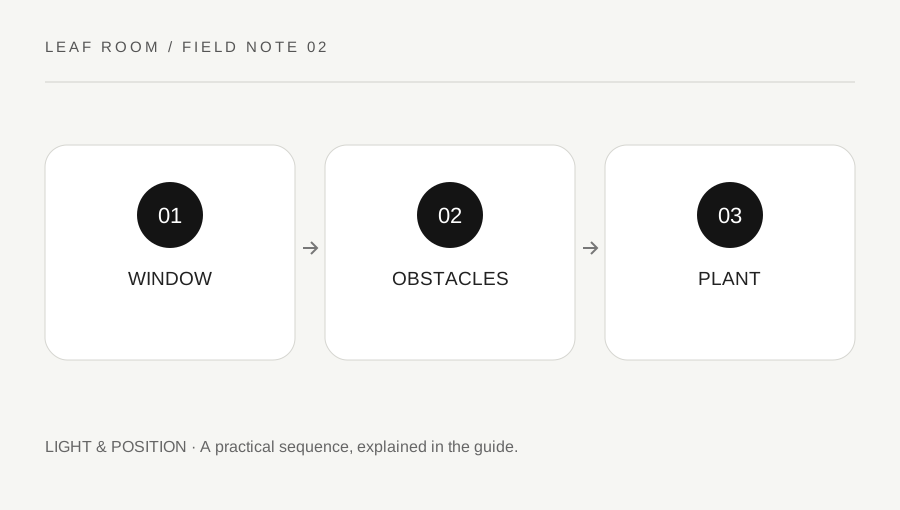
Original explanatory diagram. Numerical examples in this guide illustrate the reasoning; they are not a claim of hands-on testing.
Observe the position through the day
Choose a normal day and look at the intended position in the morning, near midday and later in the afternoon. Record direct sun patches, nearby obstructions and whether curtains stay closed. Observe the plant shelf itself: a bright-looking window does not mean an equally bright corner across the room.
In northern-hemisphere homes, a south-facing window can receive strong direct sun, but an overhang or neighboring building may change that completely. Avoid turning compass directions into guarantees. Reassess the position in winter, when both the sun path and daylight duration differ.
Match a plant to the observation
Read the species guidance and compare it with your observations. A plant described as tolerant of lower light still needs usable light; tolerance does not mean it will grow well in a dark room. A sun-loving plant may struggle where direct sun never reaches it.
Introduce changes gradually and observe new growth. Move one plant rather than rearranging a whole collection at once. Keep leaves away from hot radiators, cold glass and frequently opened exterior doors. Light and temperature can change together near a window, so record both before blaming every mark on sun exposure.
Run a one-position experiment
Write down the old location, the new location and the reason for the move. Photograph the plant from the same angle and check for new growth over the following weeks. Existing damage usually does not disappear, so compare the condition of new leaves rather than expecting brown tissue to become green again.
A practical example is a plant producing small, stretched growth on a far shelf. Move it closer to a suitable window while avoiding abrupt intense sun, then keep other care choices as stable as possible. The log will help you distinguish a change in growth from a hopeful impression.
Map one room without turning it into a laboratory
Draw a simple room plan with the window, nearby buildings or trees, and two possible plant positions. At each observation time, mark whether direct sun reaches the actual leaf area. Add a note if a curtain is normally closed while you are at work. This is a practical light map, not a measurement of a plant’s photosynthetic needs.
Compare a shelf beside the window with a table several meters away. Your eyes adapt to room brightness, so both locations may feel pleasant even though the plant receives different light. Use the map to choose the position closest to the species guidance, then observe growth rather than moving the plant every few days.
If the brighter position is also colder or hotter, write that down. A move that increases light while creating a draft is not a clean test of light alone. In a small home, the best compromise may be a slightly different shelf height or a modest change in distance from glass. Leave enough space to water safely and inspect the plant without repeatedly brushing or bending its leaves.
A practical checklist
Tick items for your own use. This checklist is saved only in this browser.
Questions that come up
Is a phone light reading a plant prescription?
Phone sensors and apps vary. Treat their readings as rough comparisons, not a substitute for species guidance and observation.
How far from a window is always correct?
There is no universal distance. Window size, obstructions, direction, season and the plant’s needs change the answer.
How quickly should I expect old damage to disappear?
Do not expect damaged tissue to repair visibly. Compare new growth and whether the damage continues to spread.
References & scope
Background references checked on 18 October 2026. The examples and practice exercises are original editorial explanations, not copied procedures or professional advice.