When to Water Houseplants: Check the Pot, Not the Calendar
A reminder can tell you to check a plant. It cannot tell you that the roots need water. Make the decision from the plant, its potting mix and its growing conditions.
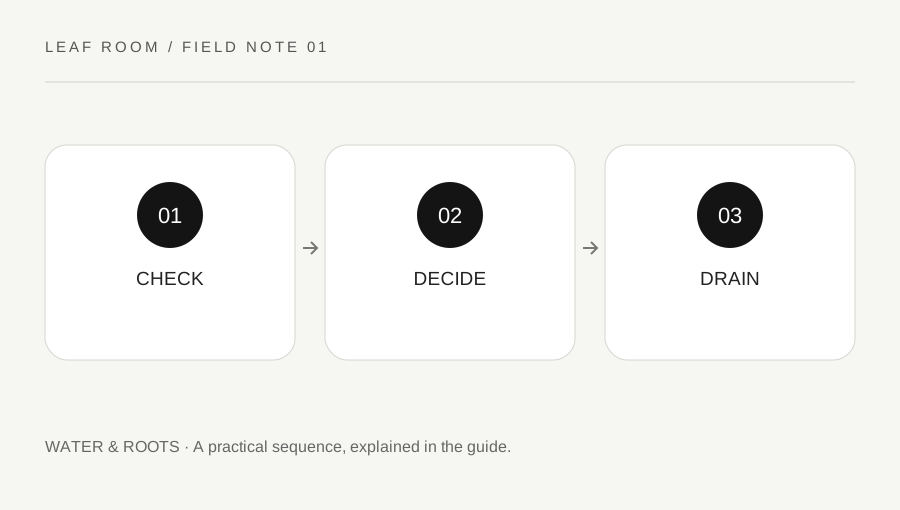
Original explanatory diagram. Numerical examples in this guide illustrate the reasoning; they are not a claim of hands-on testing.
Start with the plant and its container
Find the plant name and its care instructions before choosing how dry to let the mix become. A succulent and a moisture-loving tropical plant do not have the same threshold. Check that the nursery pot has drainage holes and look inside the decorative outer pot for standing water.
A dry surface is only one clue. Gently feel the mix below the surface where practical, lift the pot to learn its weight, and notice whether the plant is growing actively. Do not force a probe through a crowded root ball. Small pots, warm rooms and brighter positions can change drying speed.
Make a decision you can explain
For an ordinary foliage plant whose instructions allow partial drying, compare three observations: surface condition, moisture a little deeper down and pot weight. If the surface looks dry but the pot remains heavy and the lower mix feels wet, wait and investigate drainage. Watering again would not resolve a saturated root zone.
When watering is appropriate, apply water slowly to the mix, let excess drain, and empty the saucer or cover pot. Protect furniture and never leave an electrical device underneath. A quick daily splash can wet only part of a root ball and makes your observations harder to interpret.
Build a useful seven-check record
Use the observation log to record checks rather than automatic watering events. For example: Monday, heavy pot and damp mix, no water; Thursday, lighter pot and drying mix, checked species guidance; Saturday, watered and drained. These are illustrative observations, not a suggested weekly schedule.
After several checks, look for a pattern. If the pot stays wet unusually long, review light, drainage and pot size. If it dries exceptionally fast, inspect the root ball and room conditions. Recheck after a move, repot or seasonal change rather than treating the previous interval as a permanent rule.
Compare two pots in the same room
Imagine two plants of the same species beside the same window. One is in a small nursery pot and one has recently been moved into a much larger container. On the same morning, the smaller pot feels light and the mix is drying; the larger pot remains heavy and damp. Giving them identical amounts of water because they share a shelf ignores the root-zone difference.
Make two separate log entries. Record pot size, moisture observation and the action you chose. If the larger pot remains wet over several checks, look at its drainage and the amount of mix surrounding the roots. If the smaller pot dries very quickly, inspect whether roots have crowded the container. Neither observation proves a diagnosis by itself, but both lead to a more useful question than “how many days between watering?”
Keep the comparison fair by checking at similar times and noting major changes in heat or light. A hot sunny week is not directly comparable with a cool cloudy one. Your record should help you notice these conditions, not pressure you to water whenever a fixed interval has elapsed.
A practical checklist
Tick items for your own use. This checklist is saved only in this browser.
Questions that come up
Should I water every Sunday?
Use Sunday as a check reminder if it helps. Water only when that plant and its growing mix indicate it is needed.
Can a moisture meter replace every other check?
Treat a meter as one observation and follow its instructions. Readings can vary with mix and probe position. Combine them with pot weight, drainage and species requirements.
What should I write if I decide to wait?
Write the reason, such as “mix damp below surface; pot still heavy.” A decision not to add water is useful information in the care history.
References & scope
Background references checked on 18 October 2026. The examples and practice exercises are original editorial explanations, not copied procedures or professional advice.