Does a Houseplant Need Repotting? A Practical Inspection
Repotting should solve a container or root-zone problem. A bigger pot is not automatically a better growing environment.
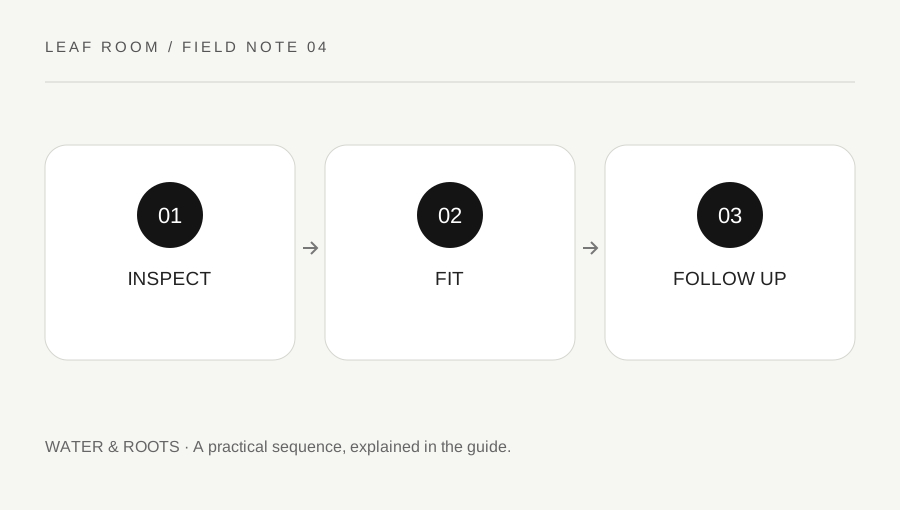
Original explanatory diagram. Numerical examples in this guide illustrate the reasoning; they are not a claim of hands-on testing.
Look for evidence before buying a pot
Consider roots filling the container, difficult watering, damaged pots or a mix that no longer behaves well. Roots visible at a drainage hole are a reason to inspect, not proof that a dramatically larger pot is needed. A healthy plant that is growing well may not need an immediate change.
Choose a clean work area, protect the surface and check the species guidance. Support the plant at its base and remove the pot gently rather than pulling on leaves or stems. If it will not release, loosen the container carefully. Avoid unnecessary handling of fragile roots.
Choose drainage and an appropriate mix
Use a container with drainage and a potting mix suitable for the plant. Increasing the size modestly is usually easier to manage than surrounding a small root ball with a large volume of wet mix. The appropriate dimensions depend on the plant and root condition rather than a universal size rule.
Do not assume a layer of decorative stones replaces drainage holes. Make sure the inner pot fits the cover pot with space to remove it and empty excess water. Keep the plant at an appropriate planting depth and avoid burying the stem simply to fill the new container.
Make aftercare observable
Record the old and new pot dimensions, the mix used and the date. Follow the plant-specific watering guidance after repotting; the new mix may dry at a different rate. Do not immediately move the plant to a radically different light position unless that is also necessary.
For a worked planning example, a plant in a 12 cm nursery pot that repeatedly dries very quickly might warrant a root inspection. The next decision is based on that inspection, not a preselected 25 cm decorative planter. Recheck moisture and new growth over time and delay unnecessary fertilizer changes until you understand how the new root zone behaves.
Prepare a repotting decision sheet
Before starting, write four lines: the problem you are trying to solve, what you observed at the roots, the proposed container, and the mix you intend to use. If you cannot explain the problem, pause before changing a healthy plant’s container. The sheet is especially useful when an attractive planter is tempting you to choose a size first and justify it later.
During inspection, distinguish a crowded healthy root ball from a wet root zone with substantial damaged tissue. Those situations need different decisions. Take care with fragile roots and use species-specific guidance where pruning or treatment is being considered. A general checklist cannot establish the right response for every plant.
After repotting, keep the old and new dimensions in the log. Note how the mix behaves at the first several checks and whether water drains freely. Do not judge the result only by the first day’s appearance. Repotting changes the environment around the roots, and its useful outcome is a manageable, appropriate root zone over time. Keep any care label and mix instructions with your notes so you can reconstruct what actually changed.
A practical checklist
Tick items for your own use. This checklist is saved only in this browser.
Questions that come up
Can I use garden soil indoors?
Use a mix intended for the plant and container. Outdoor garden soil can behave poorly in indoor pots and may introduce unwanted organisms.
Must a new pot be dramatically larger?
No. Choose a size appropriate to the inspected roots and species. Excess wet mix around a small root ball can make watering harder to manage.
Is repotting always the first response to a sad plant?
No. Check light, moisture, temperature and drainage first. Repotting should address an identified container or root-zone issue.
References & scope
Background references checked on 18 October 2026. The examples and practice exercises are original editorial explanations, not copied procedures or professional advice.