Calathea Leaves Curling: Compare Conditions Before Choosing a Remedy
A curled leaf can reflect several conditions, and some movement is part of the plant’s normal behavior. Record the timing, moisture and recent changes before treating every curl as the same problem.
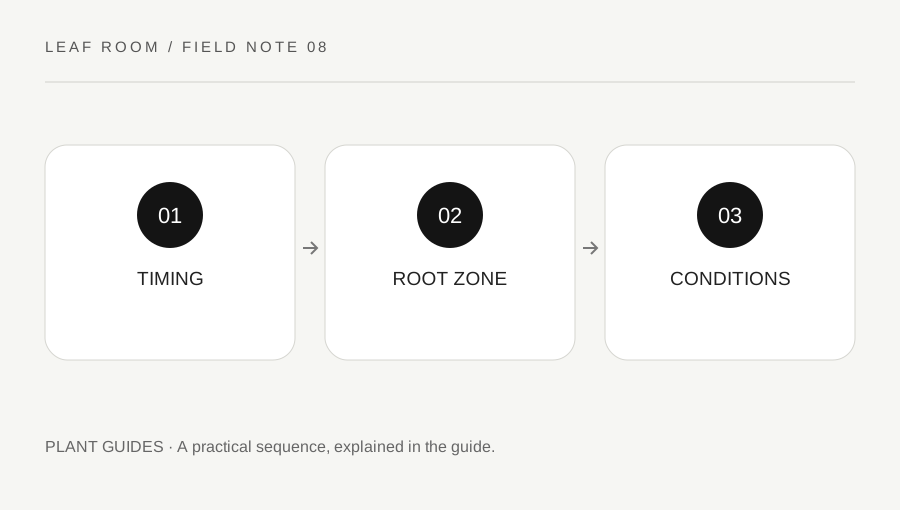
Original explanatory diagram. Examples illustrate a method or decision; they are not claims of personal testing.
Identify the pattern and the plant
Keep the label and use a guide appropriate to the calathea or related prayer plant you actually have. Common retail names can cover different named plants. The RHS notes that many calatheas move their leaves upward at night, so compare the same plant at similar times before deciding that every change in leaf position is damage.
Describe whether leaves curl temporarily, remain tightly rolled, develop dry margins or become soft and discolored. Photograph the whole plant and a representative leaf. Note a recent move, new heating routine, transport or repotting. The pattern and history are more useful than searching a symptom word and applying the first remedy to every plant with a similar photograph.
Inspect moisture and the exact position
Follow reliable plant-specific guidance for maintaining appropriate moisture without leaving roots standing in water. Check below the surface where practical, learn the pot's weight and look inside the cover pot. Do not assume a dry-looking surface proves the root zone is dry. Equally, do not interpret a heavy damp pot as a reason to add another small daily splash.
Review light and temperature at the actual leaf position. A spot near a radiator or cold window can differ from the rest of the room. If humidity is part of the species guidance, consider the room conditions rather than relying on a brief mist as proof that the environment is suitable. Avoid placing electrical humidifying equipment where water or unstable containers create a hazard.
Use a one-change observation example
Imagine a calathea curls more after being moved beside a heater. The owner records the move, checks the mix and finds it still appropriately moist rather than dry. They choose a more suitable stable position and keep the other necessary care consistent. That is a justified environmental comparison, not proof that every curled calathea needs the same relocation.
They compare the next observations at similar times of day and watch new growth. Existing dry margins may remain. If the decline continues, they seek identification and horticultural guidance instead of changing water source, feed, pot and location simultaneously. Several simultaneous changes can help by chance but make the cause and the future routine difficult to understand.
Keep water and feeding claims proportionate
Use the identified plant's guidance and an appropriate safe water source. Do not add household chemicals to water or assume a product advertised for every houseplant is suitable without reading its instructions. If a particular water-quality concern is relevant, verify it through a reliable species and local-water reference rather than accepting a universal internet explanation.
Follow fertilizer directions and the plant's active-growth context. Feeding is not an immediate cure for curling. Keep a record of the product, dilution and date if used. Seek help for rapid widespread decline or suspected pests, with clear photographs and a care history. A useful response makes the environment and root zone understandable before adding more interventions.
Judge recovery by continuing behavior
Compare whether new leaves unfold normally, whether further margins are damaged and whether the moisture pattern is stable. A single leaf changing angle after a move is not a complete recovery assessment. Keep the log brief enough that you will continue it for several checks. If another person helps, explain what to inspect and when to ask rather than leaving a fixed instruction to water whenever the leaves curl. This preserves the distinction between ordinary movement, stress symptoms and the conditions actually observed.
A practical checklist
Choices are saved in this browser. Reset them here or clear this site’s browser storage.
Questions that come up
Does every nighttime leaf movement mean stress?
No. Many calatheas show normal daily leaf movement. Compare timing, condition and the identified plant’s guidance.
Should I feed immediately when leaves curl?
No. Inspect moisture, drainage and environment first, then use feed only as appropriate under plant and product guidance.
Will brown margins become green again?
Do not expect old damage to reverse. Observe whether new damage continues and whether new growth is healthy.
References & scope
Background references checked on 18 October 2026. Worked examples and diagrams are original teaching material.