Small Flies Around Houseplant Pots: Check for Fungus Gnats Carefully
Tiny flies near a pot can be a nuisance, but identification and the growing medium matter. Compare where they appear and review moisture before choosing a control method.
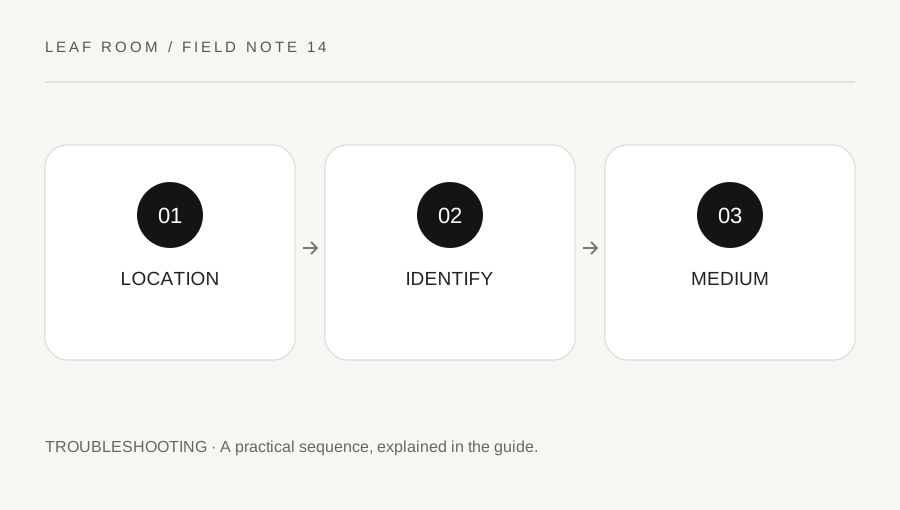
Original explanatory diagram. Examples illustrate a method or decision; they are not claims of personal testing.
Record where the flies are concentrated
Observe whether the small flies appear around potting mix, windows, food or another source. Keep a close photograph or a suitable identification note where practical. Do not assume every tiny indoor fly is associated with the plants. The RHS describes fungus gnats, also called sciarid flies, as associated with damp compost, especially in houseplants and seed trays.
Inspect the affected pots and any nearby stored growing medium. Record recent potting, new plants and changes in watering. A pattern across several containers may be more useful than one fly near a window. Avoid immediately discarding a healthy plant or applying a treatment intended for another insect solely because the adults are annoying.
Review moisture within the plant’s needs
Check whether the mix is kept wetter than the identified plant requires and whether drainage water is trapped. Use the plant's own moisture guidance rather than forcing every pot completely dry. Seedlings, cuttings and moisture-loving plants may need a different approach from drought-tolerant established plants. A generic dry-everything instruction can harm the plants you are trying to help.
Keep ordinary hygiene manageable: remove appropriate dead material and handle growing media according to its intended use. Do not add household substances or a layer of an unfamiliar material without reliable support for the actual problem. The objective is a suitable root environment and an identified management plan, not a decorative cover that hides a persistently wet pot.
Use an observation-and-advice example
Imagine several flies are repeatedly seen near a newly potted foliage plant. The owner records the timing, photographs the adults where possible and checks that the cover pot is not holding drainage water. They compare the signs with reliable fungus-gnat guidance and seek help if the identification is uncertain.
If a supported monitoring or control method is chosen, they follow the current local and product instructions and record the result. They continue the plant's appropriate care rather than assuming one treatment replaces moisture management. This is an illustrative process, not a claim that every flying insect will disappear after a fixed number of days or that one product suits every household.
Keep the follow-up focused on activity
Observe whether adult activity continues and whether the plants show any relevant decline. Do not use old cosmetic leaf marks as the only measure of a gnat problem. Keep a short timeline of watering changes and any management method so you can explain what has already been tried. Avoid combining several products or changing every pot at once without a reason.
Seek horticultural advice for persistent activity, vulnerable seedlings or uncertain identification. Keep children, pets and household users considered in any product decision. Read the exact label rather than relying on a general article for dosage or permitted setting. A useful outcome is a clearer understanding of the source and a proportionate method that preserves the plants' needs while addressing the nuisance.
Distinguish monitoring from a complete control plan
A method that catches some adults can help show where activity occurs, but it should not automatically be described as eliminating every life stage. Read what the chosen method actually does and what reliable guidance recommends for the identified situation. Keep observations consistent enough to compare over time. If counts are informal, describe them as observations rather than a measured scientific trial. This prevents a few visible catches from becoming an unsupported claim that the problem is completely solved.
A practical checklist
Choices are saved in this browser. Reset them here or clear this site’s browser storage.
Questions that come up
Are all tiny flies near a window fungus gnats?
No. Record where they occur and use reliable identification rather than assuming a plant source.
Should every pot be dried completely?
No. Keep each identified plant’s moisture needs in view and use an appropriate management plan.
Does catching adults prove every stage is controlled?
Not necessarily. Understand what the method monitors or controls and follow reliable guidance for the situation.
References & scope
Background references checked on 18 October 2026. Worked examples and diagrams are original teaching material.