Houseplant Fertilizer: Turn the Label into a Clear Care Record
Feeding should match the identified plant, product and growing conditions. Read the label, measure carefully and keep enough detail to avoid accidental repeat doses.
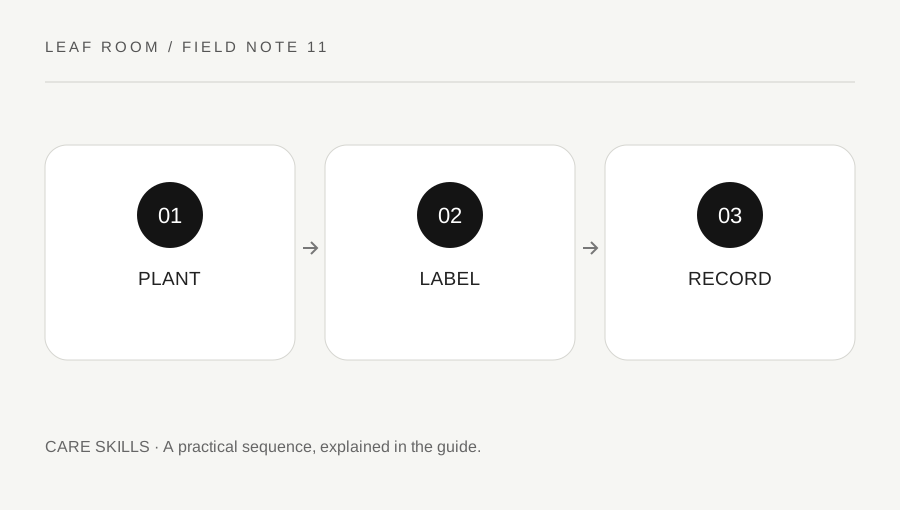
Original explanatory diagram. Examples illustrate a method or decision; they are not claims of personal testing.
Decide whether feeding is the right question
Identify the plant and review its care guidance before selecting a fertilizer. A yellow leaf, slow growth or wilting does not automatically establish a feeding deficiency. Light, moisture, drainage and root condition can be more immediate questions. Avoid adding feed as a universal rescue while the pot remains persistently wet or another clear problem is unresolved.
Note the plant's growth stage and recent repotting or product use. A potting mix may already have a feeding provision described by its manufacturer. Do not assume all mixes or plants have the same needs. The practical decision is whether this plant in these conditions calls for this product, not whether a calendar reminder says something must be added today.
Read the product instructions before measuring
Check that the fertilizer is suitable for the intended plant and application method. Read the dilution, frequency, handling and storage instructions, including any distinctions between different plant groups. Use appropriate measuring equipment and keep the product away from food preparation and anyone who should not access it. Do not transfer it into an unlabeled beverage container.
Avoid combining several feeds because each looks mild on its own. Record the exact product and instructions rather than remembering only a capful. Caps and concentrates differ. If a calculation is needed, work it out carefully from the actual label and the amount of solution required. Do not use an illustrative ratio from a general article as a substitute for the product's directions.
Use a worked record rather than a universal recipe
Imagine a label gives a dilution per liter and the owner needs a smaller amount. They calculate the proportional measure from that label, confirm they can measure it accurately and prepare only the appropriate quantity under the instructions. The record includes product name, actual dilution, date and which plants received it.
The example deliberately does not prescribe a generic concentration because products and plant requirements vary. If the required small measure cannot be taken reliably, use a suitable measuring method or ask the manufacturer rather than guessing. Keep any leftover solution handled according to the label. A careful record also prevents another household member from feeding the same pot again that day.
Review growth and stop unnecessary escalation
Observe new growth and the overall care pattern over time. Do not interpret a single unchanged leaf as evidence that the concentration should be increased. Existing damage may remain visible even when conditions improve. Record any adverse change and consult the product and plant guidance before another application.
If you suspect a dosing mistake, use the manufacturer's instructions or reliable horticultural advice for the situation rather than applying another household remedy. Keep the product packaging available for an accurate question. A useful feeding routine is measured, appropriate and traceable. It works alongside light, watering and drainage rather than replacing them with a promise that more nutrient always produces a healthier plant.
Keep season references tied to actual growth
A guide's spring-to-autumn description often reflects its climate and indoor assumptions. Compare the plant's active growth and your local conditions instead of copying month names without context. This does not mean inventing your own stronger regimen; it means using the relevant plant and product guidance thoughtfully. Mark feeding changes after a move, seasonal light change or repotting so the care history remains understandable. A simple dated record can prevent more confusion than a complex schedule maintained from memory.
A practical checklist
Choices are saved in this browser. Reset them here or clear this site’s browser storage.
Questions that come up
Should a yellow leaf trigger fertilizer?
Not automatically. Inspect moisture, drainage, light and other conditions before assuming a nutrient issue.
Is a capful a standard measure?
No. Products and caps differ. Use the actual instructions and suitable measuring equipment.
Can I increase the dose if an old leaf stays damaged?
Do not infer that from old damage. Follow guidance and assess new growth and the whole care pattern.
References & scope
Background references checked on 18 October 2026. Worked examples and diagrams are original teaching material.