Indoor Fern Fronds Drying: Identify the Fern and Check Its Root Zone
Indoor ferns vary in form and care, so a broad fern label is not enough. Identify the plant, compare old and new fronds and check the growing conditions before making several changes.
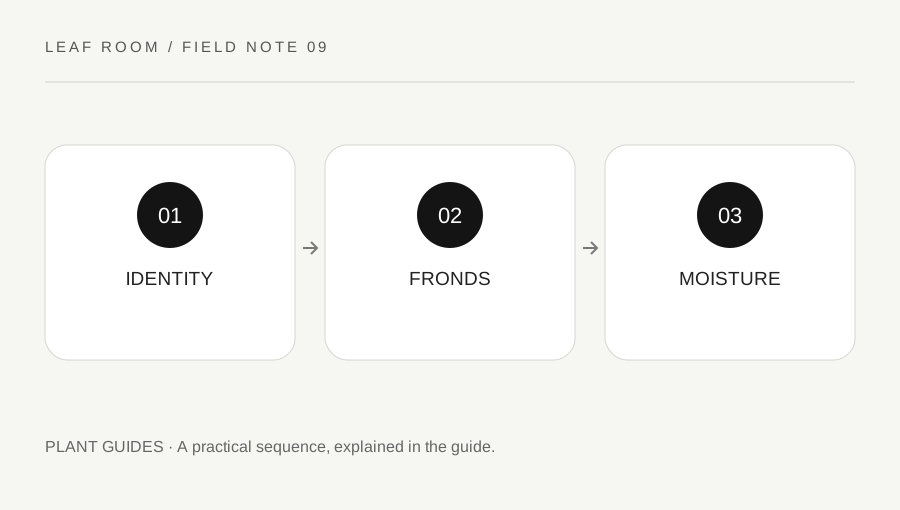
Original explanatory diagram. Examples illustrate a method or decision; they are not claims of personal testing.
Use an indoor-fern guide that fits
Keep the botanical label where available and distinguish a tender indoor fern from an outdoor garden fern. The RHS describes many common indoor ferns as preferring indirect light and moist but not waterlogged compost, while individual types still need their own guidance. A rule copied from a hardy garden fern is not automatically suitable for a houseplant pot.
Look at which fronds are affected. An old outer frond aging differs from widespread drying that includes new growth. Take a whole-plant photograph and note the position, pot and recent events. If you cannot identify the fern confidently, seek a reliable identification before using a species-specific treatment or propagation method.
Check moisture without flooding the container
Inspect the root-zone condition according to the identified fern's requirements. A fern that prefers consistent moisture should not be assumed to benefit from standing in a full decorative pot. Look for drainage holes, trapped water and a surface that gives a misleading impression of the rest of the mix. Keep watering decisions tied to the actual condition.
Review the room position too. A bright-looking bathroom may have limited usable daylight, and a shelf near a heater may be much drier than the room average. Follow reliable humidity and temperature guidance for the type. Avoid soaking delicate foliage or applying a generic leaf product simply because it is sold for houseplants. The fronds' texture and form affect what handling is suitable.
Work through a heating-season comparison
Imagine a fern begins drying at the edges after a heater starts running nearby. The owner records the change and checks whether the mix is also drying differently. They select a more suitable position based on the plant's guidance and continue careful root-zone checks rather than adding water several times a day without inspection.
They watch new fronds and continuing damage, keeping the original photographs for comparison. If the mix is instead persistently wet and the plant declines, they investigate that different condition and seek horticultural help. The example does not establish heating as the cause of every dry frond. It shows how a timeline and physical check can lead to a more focused next question.
Remove damage only after recording the pattern
Use clean appropriate tools and species guidance for removing fully dead material. Do not strip the plant merely to make the remaining foliage look tidy before you understand the pattern. Existing dry tissue may not recover, so cosmetic trimming and plant recovery need to be evaluated separately. Protect surfaces and keep plant material handled appropriately.
For persistent decline, provide the identification, photographs, container setup and care history to a reliable plant adviser. Avoid repeated feeding or repotting as a universal response. The practical goal is a stable fern with conditions suited to its type, not a promise that every frond will remain perfect. New growth and a sensible moisture pattern give more useful follow-up evidence than a freshly trimmed appearance.
Make hanging arrangements easy to inspect
A hanging fern can be difficult to reach, which encourages guessing from the visible fronds. Plan a safe way to lower or access the pot without pulling on foliage or standing on unstable furniture. Check the hanger's suitability and keep drainage from damaging floors or electrical items. Record the inner container rather than judging root space from the basket's outside dimensions. A manageable care route is part of choosing the location, especially when the plant needs more frequent observation during changing room conditions.
A practical checklist
Choices are saved in this browser. Reset them here or clear this site’s browser storage.
Questions that come up
Can every fern follow the same care schedule?
No. Identify the type and use relevant guidance. Indoor and outdoor ferns can have different requirements.
Does trimming make the plant recovered?
Trimming changes appearance. Recovery needs follow-up of new growth, continuing damage and growing conditions.
Is a bathroom automatically suitable?
No. Light, temperature and actual humidity still need assessment at the plant’s position.
References & scope
Background references checked on 18 October 2026. Worked examples and diagrams are original teaching material.