Inspect a Houseplant for Pests Before Choosing a Treatment
A sticky leaf or tiny moving speck deserves identification, not an automatic spray. Record where the sign appears, compare the whole plant and choose any response from reliable plant-specific guidance.
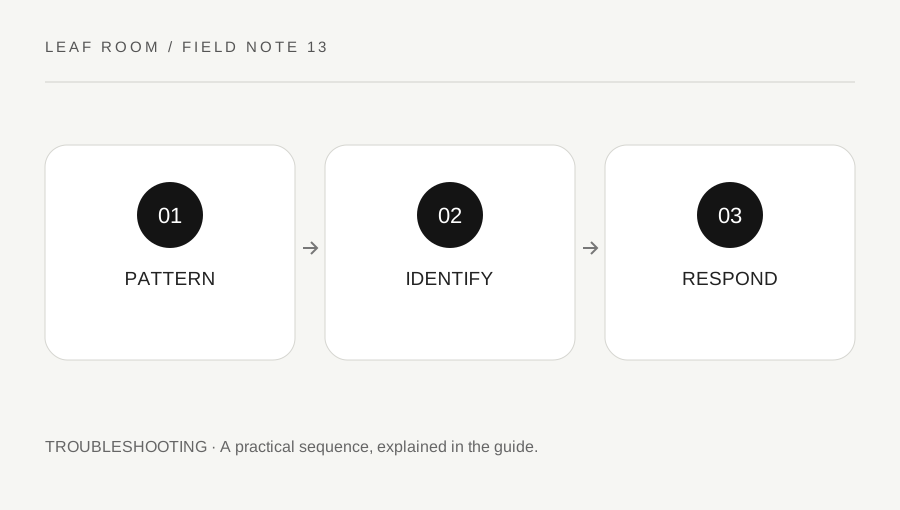
Original explanatory diagram. Examples illustrate a method or decision; they are not claims of personal testing.
Look in places that are easy to miss
Inspect new growth, leaf undersides, joints, stems and the container area gently. The RHS describes several indoor sap-feeding insects that can occur in different parts of a plant, including sheltered crevices. Use good light and a magnified photograph if helpful, without crushing or wiping away every clue before you have recorded it.
Describe what you actually see: shape, color, movement, sticky material, webbing or a pattern of damage. A fuzzy patch can have more than one explanation. Do not assign a pest name solely because one online photograph looks similar. A clear whole-plant image and several close-ups often help identification more than a dramatic symptom label.
Reduce transfer while you investigate
Where practical, keep a suspect plant apart from others and avoid sharing unclean tools or wiping materials. Continue care appropriate to the plant rather than withholding every ordinary need. Inspect nearby plants without assuming they all require treatment. A cautious separation is an observation measure, not a guarantee that no organism can move.
Record the date and any recent purchase, plant movement or material introduced. Keep handling precautions in mind and wash hands after care. Do not mix household chemicals, apply an outdoor product indoors or use a pesticide on a plant or setting not covered by its label. If a product is considered, identification, current local guidance and the actual label are essential boundaries.
Work through a sticky-leaf example
Imagine a plant develops sticky material and small raised spots along some leaf undersides. The owner photographs the pattern, checks reliable identification material and asks a horticultural adviser if uncertain. They do not immediately name the spots or spray the whole collection. The observation has narrowed the question but has not completed the diagnosis.
Once a suitable response is identified, they follow the plant and treatment guidance and record the date and affected plants. They inspect again at an appropriate interval under that guidance. This is an illustrative process, not a universal control schedule. Existing leaf damage may remain, so the follow-up should look for continuing activity and new damage rather than expecting every old mark to vanish.
Keep treatment claims and follow-up honest
A single clean-looking leaf after wiping does not establish that a pest problem is resolved. Check the relevant plant parts again and follow the reliable guidance for the identified organism. Avoid escalating through several unrelated products without recording what was used. A clear history matters if the plant is sensitive or further help is needed.
If identification remains uncertain, the problem spreads or the next action requires a hazardous or restricted treatment, seek appropriate professional advice. Keep children, pets and other household users considered under the product instructions. The useful outcome is an identified problem and a proportionate response, with the plant's ordinary growing conditions reviewed alongside pest management rather than replaced by an endless spray routine.
Keep a treatment-free baseline photograph
A dated image before intervention makes it easier to compare what changed and to describe the original evidence later. Include one view showing where the affected parts sit on the plant. Do not rely on a tightly cropped image that removes the context of new versus old growth. If you remove damaged material as part of a supported method, record that too. This avoids mistaking a cleaner appearance caused by pruning for proof that the underlying activity has stopped.
A practical checklist
Choices are saved in this browser. Reset them here or clear this site’s browser storage.
Questions that come up
Should every nearby plant be sprayed immediately?
No. Inspect and identify the problem first, then choose a proportionate response under reliable guidance and the product label.
Does wiping one leaf prove the issue is gone?
No. Follow up on relevant plant parts and look for continuing activity or new damage.
Can I use an outdoor product indoors?
Use a product only where the label and current local rules permit. Do not improvise a different setting or mixture.
References & scope
Background references checked on 18 October 2026. Worked examples and diagrams are original teaching material.