Monstera Support: Plan for a Climber Without Forcing Its Roots
A monstera’s stems and aerial roots reflect a climbing habit. Choose a stable support and a manageable care arrangement before a growing plant becomes difficult to move or inspect.
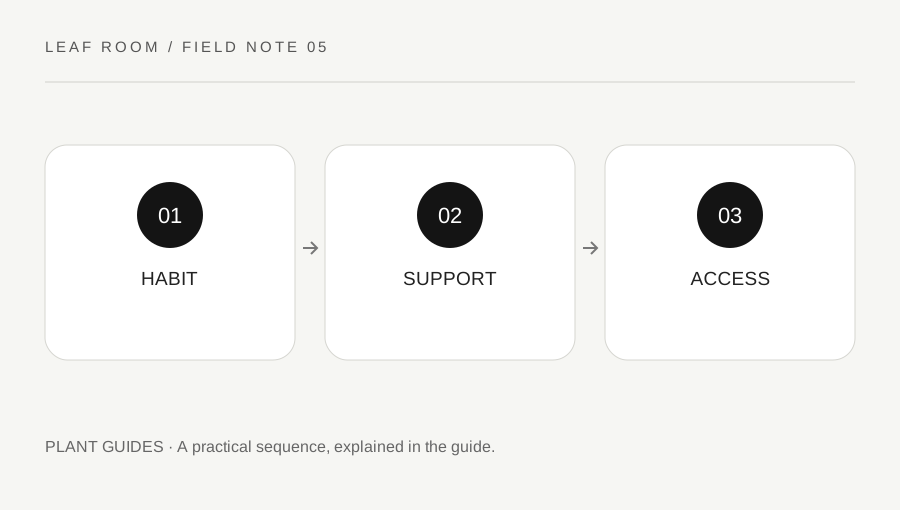
Original explanatory diagram. Examples illustrate a method or decision; they are not claims of personal testing.
Identify the plant and growth direction
Confirm the botanical identity where possible rather than treating every perforated leaf as the same species. Monstera includes plants with different sizes and habits, and an individual plant's age also affects its appearance. The RHS describes Monstera deliciosa as a climbing plant with aerial roots. Use a suitable species guide for care rather than copying a setup intended for an unrelated plant.
Look at the stems and where new growth is developing before adding a support. Distinguish supporting the stem from tying individual leaf stalks into an unnatural position. Choose a plan that leaves space for growth and ordinary inspection. A plant does not need to be forced into a decorative shape at the expense of accessible watering and stable footing.
Choose stability and gentle attachment
Use a support and container arrangement suited to the plant's size and the available safe space. Follow reliable plant-specific methods for placement and attachment. Keep ties gentle and inspect them as growth expands so they do not cut into tissue. Do not push a large stake blindly through a crowded root ball or yank aerial roots to make them point where you want.
Check the pot's stability with the plant's current weight and reach in mind. Keep it out of a route where leaves or stems will be repeatedly hit. Avoid attaching the plant to electrical fittings or temporary furniture that may move. The support should make care more manageable, not create a new fall or obstruction problem.
Use a support-planning example
Imagine a young monstera leans toward a window while new growth extends beyond the original small stake. The owner records the position, checks suitable light and plans a more stable support using species guidance. They do not assume the only answer is a much larger pot or a new fertilizer. The next action follows the actual physical arrangement and root inspection needs.
After the support change, they photograph the plant from the same angle and inspect ties and new growth periodically. If repotting was also necessary, they record both changes so later observations remain honest. This is a planning example rather than a guarantee about leaf size, holes or the rate at which a particular plant will climb.
Keep aerial roots and routine care in perspective
Use reliable species guidance before cutting or redirecting roots. An aerial root is not automatically a sign that the pot is too small, nor should it be forced into a tight arrangement for appearance. Preserve the plant's physical condition and protect surfaces while choosing a practical position. Seek horticultural advice if the support or root arrangement is difficult to assess safely.
Continue observing the mix and drainage rather than watering a support on a universal timetable. Check exact-plant handling and safety information where children or pets have access. The useful outcome is a stable climber with room to grow, ties that remain appropriate and a pot you can still inspect. Leaf appearance should be interpreted with maturity and growing conditions in mind.
Plan the route for future care
Before the plant becomes larger, decide how you will reach the inner pot, empty drainage water and inspect leaf undersides without twisting stems. A beautiful arrangement that requires dragging the whole plant across a room for every check may become difficult to maintain. Keep access simple and protect floors and furniture during care. If the plant needs moving, support the container rather than lifting by leaves or roots. This practical route matters as much as the support's appearance.
A practical checklist
Choices are saved in this browser. Reset them here or clear this site’s browser storage.
Questions that come up
Do aerial roots prove a monstera needs repotting?
Not by themselves. Consider the species, climbing habit, root zone and actual container conditions.
Should I tie every leaf stalk to the pole?
Use a reliable species-specific support method. Do not force leaves or stems into an unnatural position.
Will a support guarantee larger split leaves?
No. Maturity and growing conditions also matter. Avoid promising a particular leaf result from one change.
References & scope
Background references checked on 18 October 2026. Worked examples and diagrams are original teaching material.