Pothos Care: Read the New Growth Before Changing Everything
A pothos can trail or climb, but its position still needs useful light and manageable watering. Watch the newest growth and the potting mix rather than judging care from vine length alone.
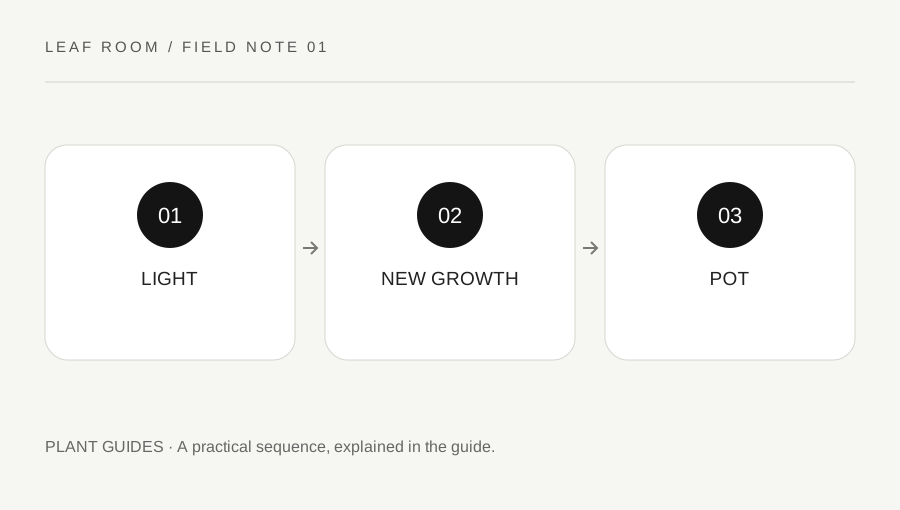
Original explanatory diagram. Examples illustrate a method or decision; they are not claims of personal testing.
Identify the plant and its growing arrangement
Keep the plant label and confirm the botanical identity when possible. Pothos commonly refers to Epipremnum, but common names can be used loosely. Note the cultivar if known, because leaf appearance is part of the identification. The RHS describes it as a climber that can also trail, with bright indirect light a useful starting condition and protection from strong summer sun.
Check how the stems are supported or hanging and whether they are being pulled by their own length. Choose a stable position where the pot can be removed for inspection and drainage. A high shelf is not automatically a suitable light position, and a long trailing stem should not obstruct a walkway or put the container at risk of falling.
Make watering a root-zone decision
Inspect the mix and pot weight before adding water. Follow the identified plant's guidance and make sure excess water can leave the inner pot. Check inside a decorative cover pot after watering rather than assuming drainage holes solve every standing-water problem. A small splash each day can make the surface look attended to without giving you a clear picture of the root zone.
Record whether the mix is drying normally in the actual position. A move farther from a window can change drying behavior, so do not carry the old interval forward automatically. Avoid adding fertilizer as the first response to stretched or sparse growth. Light, root conditions and the recent care history deserve inspection before several new products are introduced.
Use a short new-growth comparison
Imagine a pothos has long stems with widely spaced small leaves on a dim shelf. The owner records the existing growth, checks the species guidance and moves it gradually to a more suitable bright indirect position. They keep watering decisions observational and compare the next leaves rather than expecting old gaps to fill immediately.
This is an illustrative experiment, not a guarantee that light is the only possible cause of sparse growth. Record the date, location and any other necessary change. If several adjustments happen together, say so in the log. New growth offers a clearer comparison than repeatedly photographing the oldest damaged leaf and hoping the damage disappears.
Handle stems and trimming deliberately
If pruning is needed for manageable growth, use clean suitable tools and reliable plant-specific guidance. Do not cut simply because a vine is long if the plant is healthy and the arrangement is safe. Keep cut material out of reach of children and pets and check the exact plant's handling and toxicity information through an appropriate reliable source.
If you want to propagate, identify the correct part and method before cutting. A decorative leaf in water is not automatically a viable new plant. Keep any propagation attempt labelled and separate from the parent's care record. Seek identification or horticultural help for rapid decline, persistent soft tissue or suspected pests rather than repeatedly trying unrelated treatments.
Check the shelf as the plant grows
A growing vine can change the load and reach of the original arrangement. Recheck that the pot is stable, the support does not cut into stems and the container remains accessible for drainage. Avoid attaching growth to electrical fittings or relying on a fragile decorative hook. The practical goal is a healthy plant in a position you can care for consistently. Record support changes so a later growth comparison does not ignore a physical rearrangement that happened at the same time.
A practical checklist
Choices are saved in this browser. Reset them here or clear this site’s browser storage.
Questions that come up
Does a long vine prove the plant has enough light?
No. Inspect leaf spacing, new growth and the actual position alongside the plant’s requirements.
Will old bare gaps fill immediately after a move?
Do not expect old growth to reverse automatically. Compare the condition of new growth and follow suitable pruning guidance if needed.
Is a cover pot enough for drainage?
Check the inner pot and empty collected water. A decorative outer pot can still trap drainage.
References & scope
Background references checked on 18 October 2026. Worked examples and diagrams are original teaching material.