Snake Plant Care: Drought Tolerance Does Not Mean No Checks
A snake plant can tolerate a light-touch routine, but a wet hidden pot can still create trouble. Match the identified plant to its light and drainage conditions and record slow changes patiently.
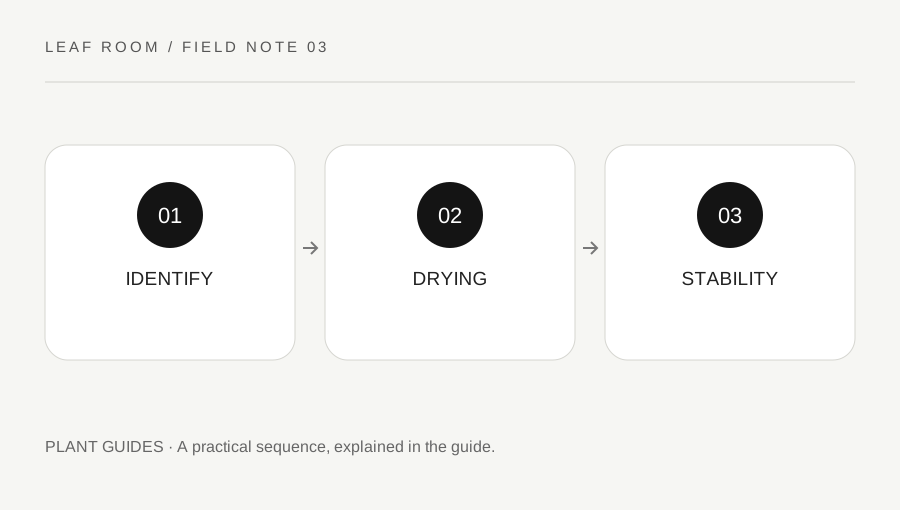
Original explanatory diagram. Examples illustrate a method or decision; they are not claims of personal testing.
Use the appropriate snake-plant guidance
Snake plants are often labelled Sansevieria, while botanical classifications and labels may also use Dracaena. Use a guide that actually covers the succulent snake plants rather than assuming every plant under a broader genus has identical care. The RHS maintains a specific Sansevieria guide describing their fleshy leaves and drought tolerance.
Record the label, leaf form and container arrangement. Place the plant where the pot is stable and the stiff leaves are not repeatedly knocked. A position described as low light is not the same as a room with no usable light. Compare the actual conditions with the identified plant's requirements rather than treating resilience as permission to ignore the growing environment.
Inspect moisture before adding water
Let the appropriate drying condition develop according to reliable plant-specific guidance, then water and drain carefully. Check the inner pot as well as the decorative outer container. A dry surface above a heavy wet root ball is a reason to inspect further, not an automatic instruction to water again. Free drainage matters alongside the watering decision.
Notice that drying speed changes with season, light, container size and room conditions. A reminder can prompt an inspection without dictating an action. Do not compensate for a missed calendar date by adding extra water. Record why you watered or waited. This creates a care history you can use if the leaves later soften, lean or change color.
Work through a hidden-water example
Imagine a snake plant sits in a nursery pot inside a deep decorative container. The owner adds water whenever the visible surface looks dry. On inspection, the outer pot contains standing water and the inner pot remains heavy. Emptying trapped water and reviewing the watering decision is a more relevant first step than buying a stronger fertilizer.
The owner records the finding and watches the condition over time, consulting plant-specific help if soft or deteriorating tissue continues. The example does not prove that every soft leaf has the same cause. Its purpose is to show how a physical observation can guide one justified change instead of several speculative treatments.
Judge slow growth with patience and context
A resilient plant may change slowly, and old damage may remain visible after conditions improve. Compare the newest growth and the overall stability rather than expecting a rapid cosmetic recovery. Keep a baseline photograph and note any move, repotting or feeding change. Avoid disturbing the roots repeatedly just to confirm that something is happening.
For feeding, repotting or division, follow the identified plant's guidance and product labels. Do not use plant resilience as a reason to experiment with household chemicals or unusually concentrated fertilizer. Check exact-plant handling and pet-safety information through a reliable source if those concerns apply. Seek horticultural help for persistent decline rather than converting a simple routine into repeated interventions.
Keep a tall pot from disguising a small root zone
A decorative container can be much larger than the actual nursery pot. Measure and record the inner container when comparing drying or planning a repot, because the outer dimensions can give a misleading impression of root space. Check whether packing material or a raised insert blocks drainage or hides collected water. Keep the arrangement easy to lift and inspect safely. A container chosen for appearance should still allow the ordinary checks that make a low-maintenance routine reliable.
A practical checklist
Choices are saved in this browser. Reset them here or clear this site’s browser storage.
Questions that come up
Can a snake plant live with no light?
Tolerance of lower light is not a requirement-free condition. Match a real position with usable light to the identified plant’s guidance.
Should I water extra after forgetting a scheduled date?
Base the next action on the current root-zone condition, not compensation for a calendar interval.
Does old damage prove the new routine failed?
Not necessarily. Record continuing damage and new growth rather than expecting old tissue to become undamaged.
References & scope
Background references checked on 18 October 2026. Worked examples and diagrams are original teaching material.