Spider Plant Babies: Plan a Small Propagation Attempt
Spider-plant plantlets make an approachable propagation project, but the parent and the new plant still need their own care. Identify a suitable plantlet, prepare first and observe establishment.
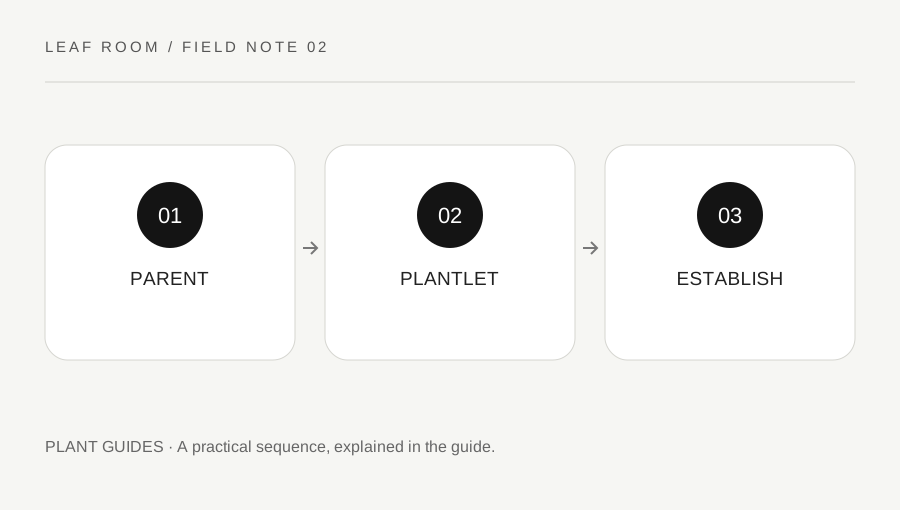
Original explanatory diagram. Examples illustrate a method or decision; they are not claims of personal testing.
Check the parent before taking material
Confirm the plant is a spider plant, commonly Chlorophytum comosum, and inspect its general condition. Look for healthy growth, manageable root-zone moisture and any suspected pests. A struggling parent does not need a large propagation project added to its care. The RHS describes spider plants as adaptable houseplants that can produce plantlets on long stems.
Not every young plant produces offsets immediately. Do not interpret the absence of babies as proof of a fertilizer deficiency or respond by heavily feeding the pot. Read the plant's guidance and assess maturity and growing conditions. Keep the ordinary parent care stable while deciding whether there is suitable material for a small attempt.
Prepare the container and method first
Choose a small clean container with drainage and a suitable potting mix, following a reliable spider-plant propagation method. Prepare a label and a protected place before separating any material. The exact method should suit the plantlet's condition; do not cut several off and only then decide where they will go.
If rooting while attached is appropriate under the chosen guidance, arrange the small pot securely beside the parent without stretching the connecting stem. If separating a suitable plantlet, use clean tools and handle it gently. Keep the project modest so you can inspect each new pot. A row of oversized wet containers is harder to manage than one well-labelled attempt.
Use an observation-based establishment example
Imagine the owner chooses one healthy plantlet and follows a reliable method to establish it in a small drained pot. They label the date and method, record the starting condition and check the mix rather than watering it on the parent's schedule. The new container and smaller root system may behave differently from the original pot.
They watch for stable foliage and new growth over time, avoiding repeated pulling to see whether roots exist. This is an illustrative care record, not a promise of a fixed rooting deadline. If the plantlet wilts or deteriorates, they inspect moisture and conditions before adding fertilizer or repeatedly changing methods. A single attempt can teach more than many unrecorded experiments.
Keep parent care and new-plant care distinct
Continue checking the parent for normal moisture and drainage after the material is taken. The new pot should have its own label and observations. Avoid placing both in an unsuitable position simply because they look attractive together. Useful light, stable conditions and access for checking matter more than completing a decorative arrangement immediately.
If you intend to give the new plant away, wait until it is reasonably established and provide its identity and honest care information. Do not promise that it cannot be harmed or that it is suitable around every pet. Use reliable exact-plant safety information where needed. A successful propagation project includes a clear handoff, not just a detached plantlet in a container.
Notice brown tips without treating them as one diagnosis
A brown tip is a visible symptom, not a complete explanation. Record whether it affects old foliage, new foliage or the newly established plant only. Check recent handling, moisture, light and any other relevant condition against reliable guidance. Avoid changing feed, water source and location all at once without a reason. If you trim damaged tips for appearance, keep enough photographic evidence to compare whether new damage is still developing. The condition of new growth is a more useful follow-up than the cosmetic result of trimming.
A practical checklist
Choices are saved in this browser. Reset them here or clear this site’s browser storage.
Questions that come up
Does every spider plant need to produce babies quickly?
No. Maturity and conditions matter. The absence of plantlets is not, by itself, a diagnosis of a feeding problem.
Should I pull a plantlet to check for roots?
Avoid repeated disturbance. Follow the chosen method and assess establishment through gentle appropriate observation.
Can I give away a newly detached plantlet as established?
Describe its actual stage honestly and provide identification and relevant care information.
References & scope
Background references checked on 18 October 2026. Worked examples and diagrams are original teaching material.